Quoting And Paraphrasing
Because there is a very poor level of understanding of what science is and how it differs from the humanities, it is frequently falsely claimed that scientific activity consists of rewriting writings from one writer to another, from the other to a third author, and from a third author to a fourth author. In light of this, he made the scientific revelation that every fifth writer says exactly like the first and all of the others. I’ll do my best to acquaint you with the fundamental ideas of using the material productively.
Using citation, paraphrase and paraphrasing tool
First, so as not to force the door open. Secondly, to be able to refer to what has already been worked out in the history of science. Third, to stand on the shoulders of giants. This is why it is worth using a paraphrasing tool or text of other researchers to enrich our thoughts and present them in the context of what has already been done. This kind of thinking must appear even in student final and diploma theses, because they give the opportunity to belong to the group of people who discover something interesting and have something to offer thanks to the efforts of their own intellect.
What is a quote?
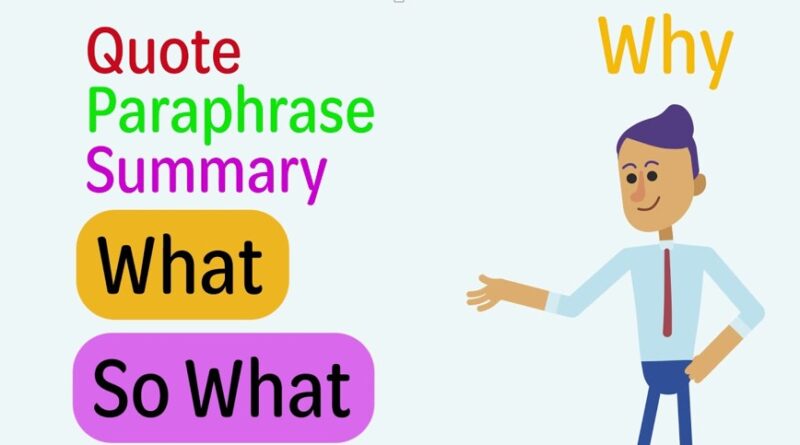
A quote is a literal quotation in the text of a fragment of another text (usually a literary work) or someone else’s words. In school essays written by hand, quotes should be quoted in quotation marks, in print they can be distinguished in a different font. We use quotes when we need somebody’s judgments to justify our own opinion. When you convince someone about something that is the highest value, you can quote from others to show that you are not alone in your judgments. Sometimes a quote is not an argument, but only a decoration, variety to our work. We use the words of poets, because we ourselves cannot name feelings so beautifully or convey the mood so well. The accuracy of the selection of quotes depends on your literacy skills, reading and the contents of the bookcase. Weaving quotes is an art that anyone can learn.
What is a paraphrase?
A paraphrase is in other words an overview. It is a recall of thoughts from another work, but not exactly in the words that were used there. However, you should try to paraphrase and discuss it whenever possible. When using quotes and a pair of phrases, one should follow the iron rule regarding disclosing the sources we use. It is here that the scientific essence of the guest is that each scientific work is equipped with a critical apparatus that will enable the reader to enter into a dialogue with the author. If it is already obvious for you to quote a pair of phrases and refer to various sources, it is worth paying attention to one more detail. When he mentions the authors, he refers to in the text.
How to introduce source authors into the text?
It is helpful to use different versions of references to the same person. For example: we do not write Thomas Aquinas in each sentence consecutively. It is worth using other terms here, for example Aquinas, the author of Summa Theologica, Saint Thomas etc.
Bottom line
Although it may be hard to believe, working with text from sources is an extraordinary intellectual adventure. We have the opportunity to enter into a dialogue with the giants of intellect. Quoting, paraphrasing, discussing other authors, we come into mental contact with them and learn – in fact – from the best teachers in the world.